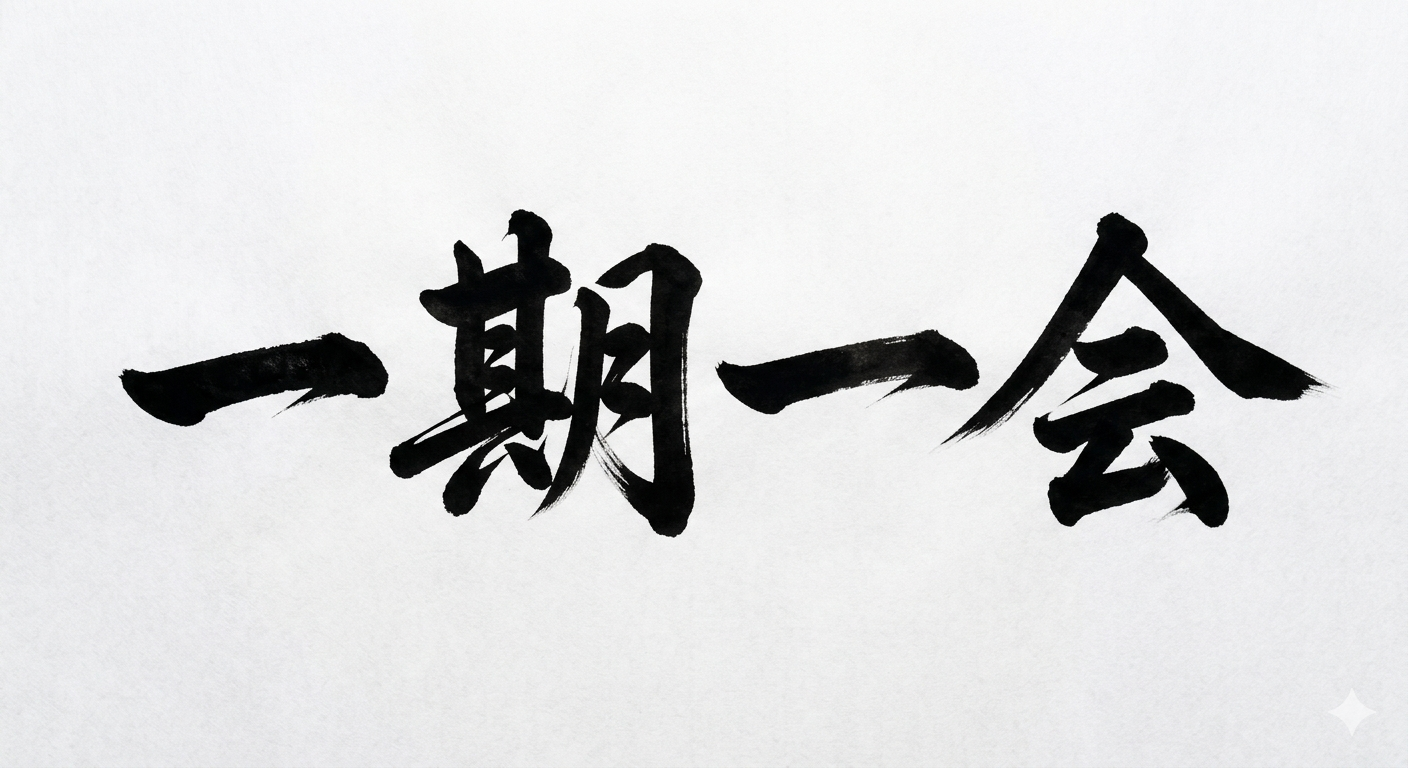
Yojijukugo are four-character idiomatic expressions in Japanese.
Each one is made up of four kanji and conveys a specific meaning, often in a very compact and symbolic way.
One of the appealing aspects of Yojijukugo is their simplicity: ideas that would normally require long explanations can be expressed in just four characters.
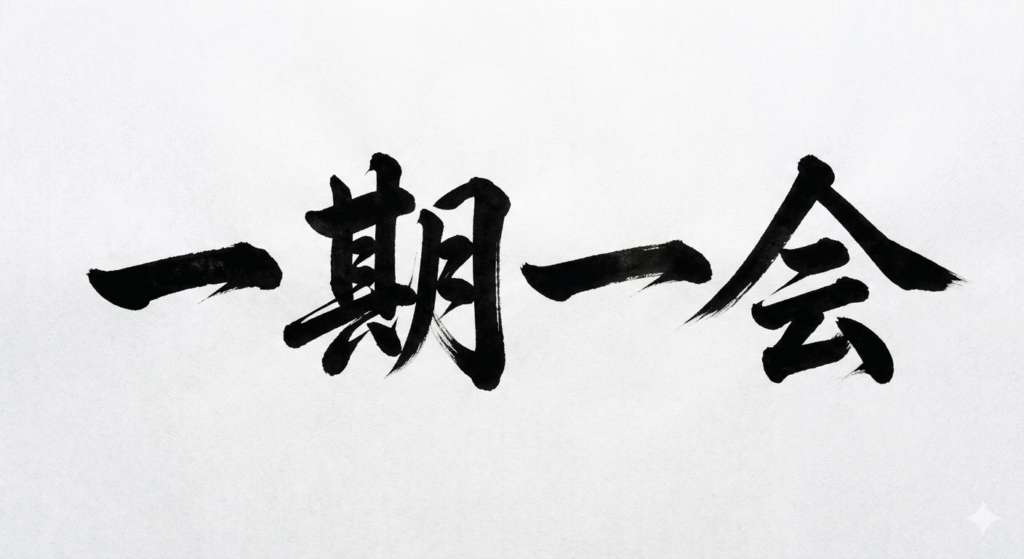
For example, ‘一期一会’ (ichigoichie) means ‘once-in-a-lifetime encounter,’ emphasizing the importance of cherishing each moment.
And they also look visually striking when written in kanji, which makes them especially cool.
Useful Yojijukugo for Everyday Life
I would introduce follow Yojijukugo.
- 自業自得(jigoujitoku)
- 一石二鳥(issekinichō)
- 臨機応変(rinkiōhen)
- 優柔不断(yūjūfudan)
- 前代未聞(zendaimimon)
自業自得(jigoujitoku)
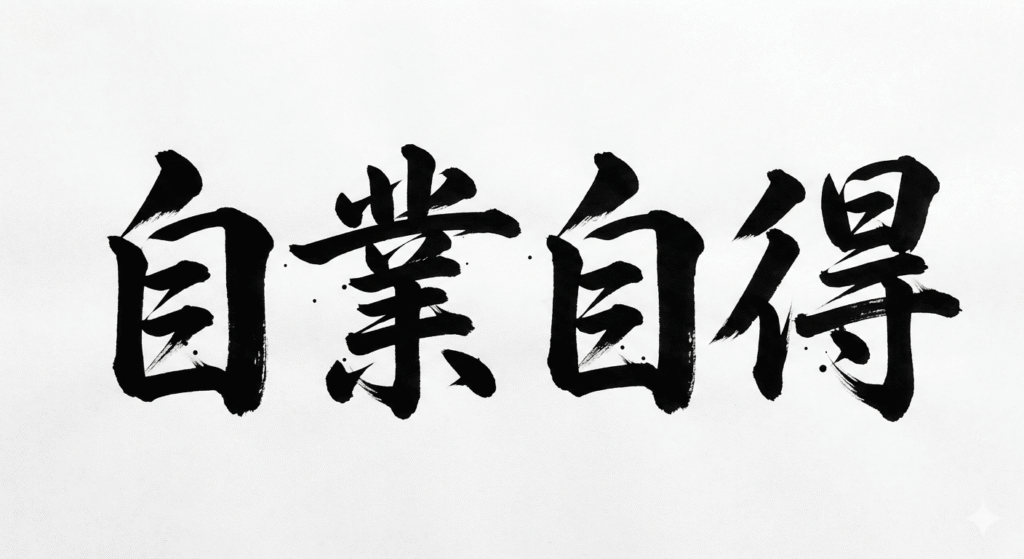
自 (self), 業 (actions), 自 (self), and 得 (result) together express the idea that your own actions bring your own results. In other words, ‘jigoujitoku’ means that you caused your own problem, or simply, ‘it’s your own fault.
for example,
ex1:
A: “I only slept for two hours because I played games all night.”
B: “Well, that’s jigoujitoku.”
ex2:
I ate too much junk food and gained weight. Jigoujitoku, I guess.
一石二鳥(issekinichō)
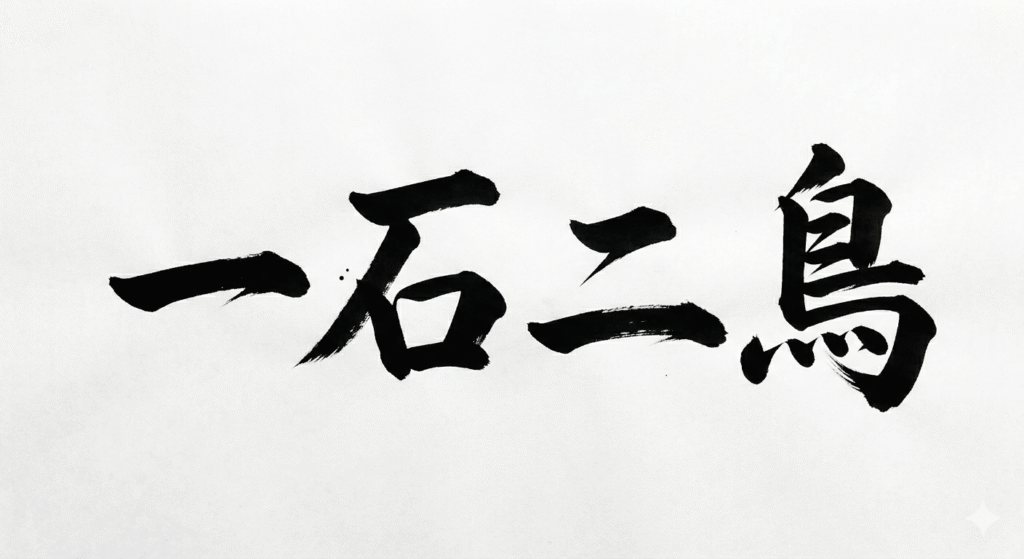
一 (one), 石 (stone), 二 (two), and 鳥 (birds) together create the image of hitting two birds with a single stone. Therefore, ‘issekinichō’ means achieving two benefits with one action.
for example,
A: “I listen to English podcasts while walking.”
B: “You’re exercising and studying English at the same time. That’s issekinichō.”
臨機応変(rinkiōhen)
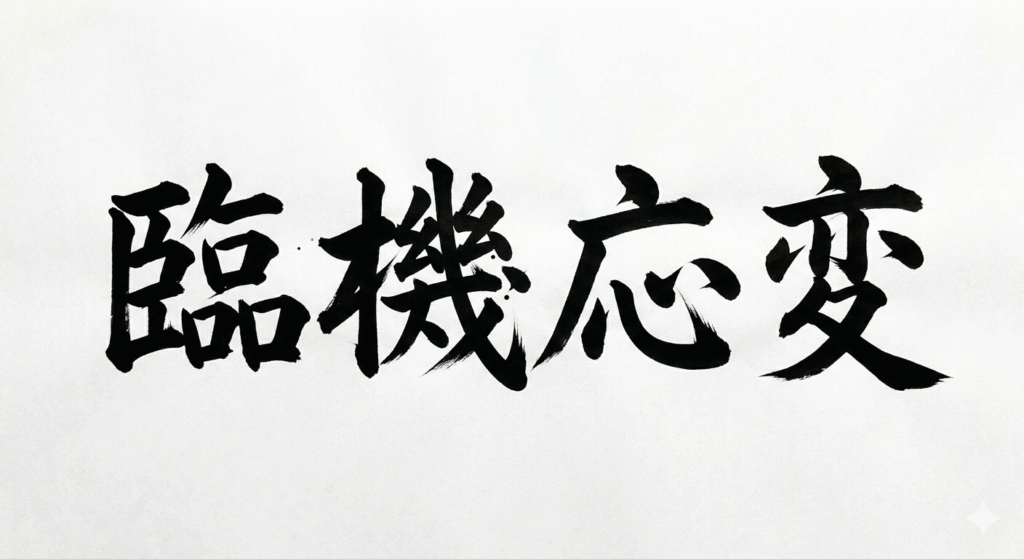
臨 (face), 機 (situation or opportunity), 応 (respond), and 変 (change) together express the idea of responding appropriately to changing situations. In other words, ‘rinkiōhen’ means being flexible and adapting to circumstances as they arise.
for example,
A: “The train was delayed, so I took a different route to work.”
B: “Good idea. That’s rinkiōhen.”
In business and everyday life, rinkiōhen is often considered an important skill because unexpected situations happen all the time.
優柔不断(yūjūfudan)
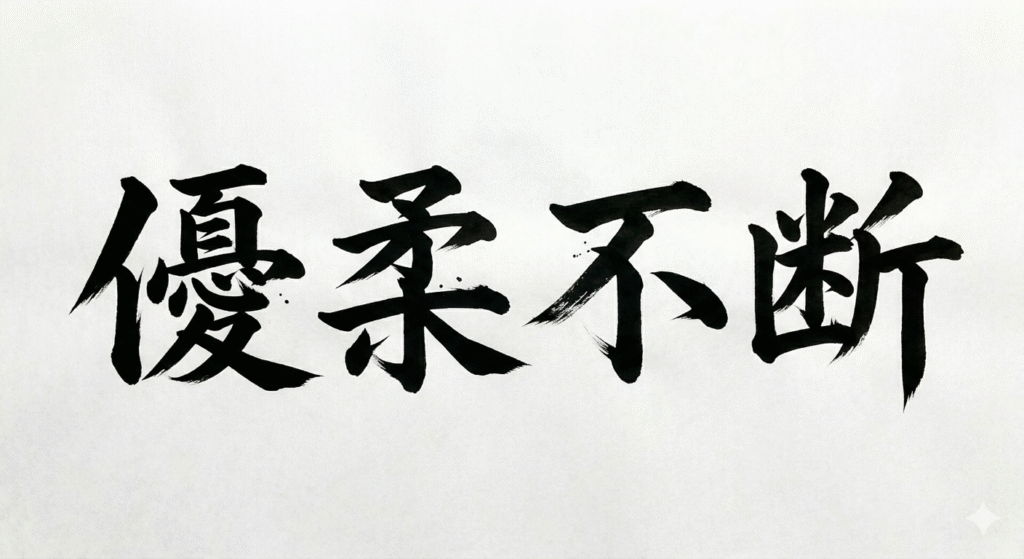
優 (gentle), 柔 (soft), 不 (not), and 断 (decide) together describe someone who is too gentle or hesitant to make a firm decision. In other words, ‘yūjūfudan’ means being indecisive or having difficulty making decisions.
In Japanese culture, being considerate of other people’s feelings is often valued. Because of this, some people hesitate to make quick decisions if those decisions might inconvenience, disappoint, or conflict with others. This cultural tendency may help explain why the kanji “優” (gentle) and “柔” (soft) are associated with indecisiveness in the expression “yūjūfudan.”
for example,
A: “It took me thirty minutes to choose what to order at the restaurant.”
B: “Wow, that’s yūjūfudan.”
前代未聞(zendaimimon)
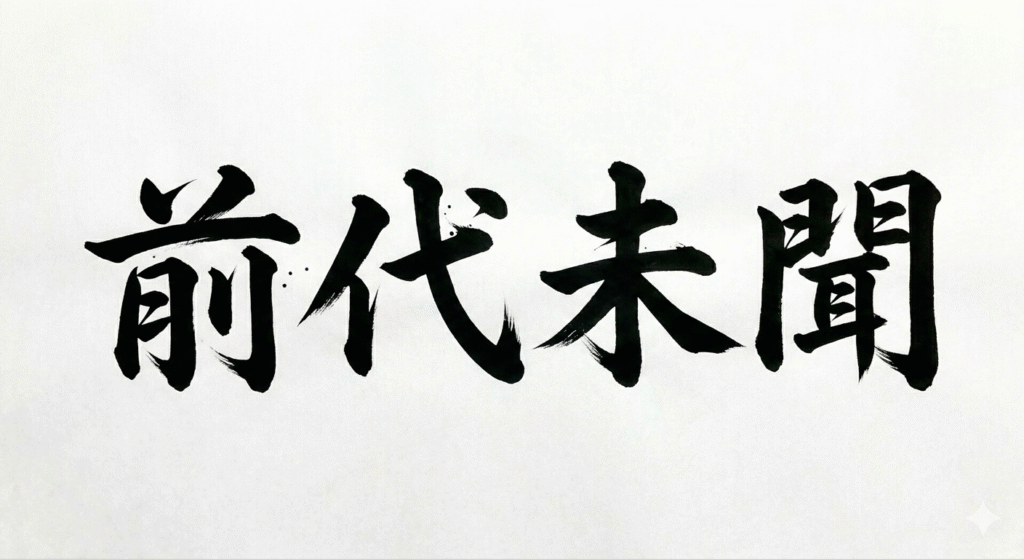
前 (before), 代 (generation or era), 未 (not yet), and 聞 (hear) together express the idea of something that has never been heard of in any previous generation. In other words, ‘zendaimimon’ means something unprecedented, extraordinary, or completely unheard of.
for example,
A: “A cat became the mayor of a town.”
B: “Wow, that’s zendaimimon!”
I would like to introduce Yojijukugo
and more, I would like to introduce other Yojijukugo.
In fact, we rearly use the Yojijukugo in everyday conversation.
But cool. Really cool. it is very important.
It is ‘花鳥風月’ (kachōfūgetsu)
It means appreciating the beauty of nature and the changing seasons.
‘花’ means a flower.
‘鳥’ means a bird.
‘風’ means wind.
‘月’ means a moon.
Together, these represent some of the most beautiful elements of nature.
Therefore, ‘kachōfūgetsu’ means appreciating nature and finding inspiration, peace, and beauty in the natural world.
Leave a Reply